Experience with MM MRD in our clinical laboratory: theory and practice

Share post on social media:
Experience with MM MRD in our clinical laboratory: theory and practice

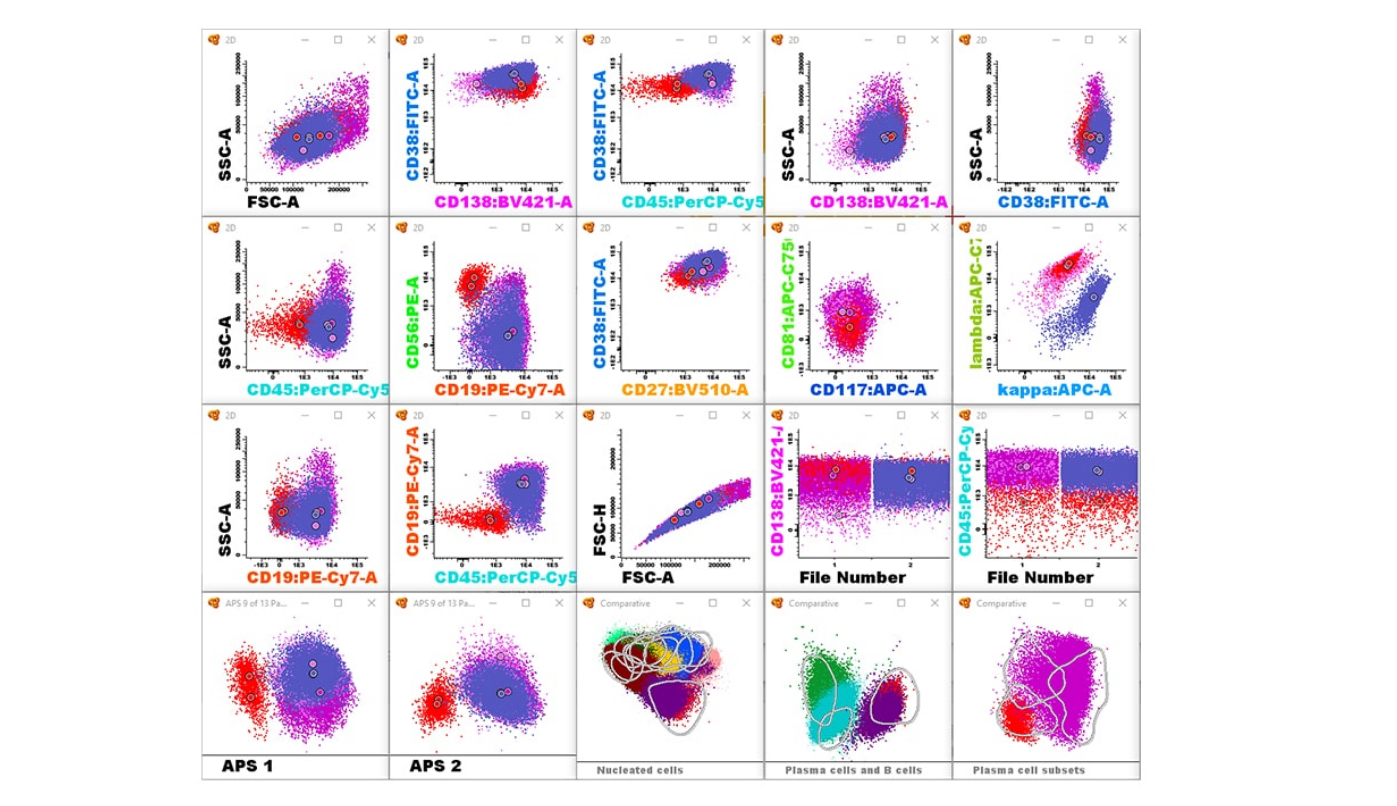
The level of minimal residual disease (MRD) is paramount to link the depth of response and long-term outcome. Recent advances in treatment demand a more sensitive response criteria which includes MRD evaluation. Therefore, MRD has been defined as one of the best surrogate markers to predict overall survival and accelerate the approval of new therapies in Multiple Myeloma (MM).

In this webinar, Mantas Radzevičius explain the experience with MM MRD in his clinical laboratory, from a theoretical and practical perspective.


You might also like...

View blog
Monitoring Circulating Plasma Cells in routine diagnostics in Multiple Myeloma
0 min read
Monitoring Circulating Plasma Cells in routine diagnostics in Multiple Myeloma
Next Generation Flow Cytometry (NGFC) plays an important role in diagnostics, providing a highly sensitive method to generate reliable data...
Why changing from manual to automated analysis of the LST tube?
0 min read
Why changing from manual to automated analysis of the LST tube?
The EuroFlow™ Lymphoid Screening tube (LST) was designed to identify the major T and B-cell subsets, in addition to NK-cells, monocytes,...
Capabilities of the flow cytometric OX40 assay to determine specific SARS-CoV-2 T cell responses
1 min read
Capabilities of the flow cytometric OX40 assay to determine specific SARS-CoV-2 T cell responses
The adaptive immune response to SARS-CoV-2 includes specific antibody and T cell responses. The identification of a subpopulation of...