The hidden costs of inconsistent yield during assay setup
Yield variability can create challenges long before data analysis begins. When nucleic acid concentrations differ between samples, extra time and resources are needed to normalise assay inputs, adding complexity to an otherwise standardised workflow. As studies scale, these inconsistencies can affect efficiency, reproducibility, and project timelines, making yield consistency an important factor in discovery research.
Inconsistent yield:
- Makes assay normalisation more complex by requiring sample-specific input adjustments.
- Affects workflow consistency through variations in pipetting volumes, reagent use, and plate setup.
- Makes scaling automated and high-throughput workflows more challenging.
- Increases reruns when low yields require repeat extractions or higher sample inputs.
- Risks sample loss when limited or valuable samples cannot be reprocessed.
- Raises costs through increased reagent consumption, labour, and instrument time.
- Extends project timelines, slowing progress in pharma, CRO, and biotech research.
- Introduces technical variability, making results harder to reproduce and interpret.
How variable extraction yield affects assay interpretation
Beyond workflow inefficiencies, inconsistent yield can also affect data quality. Many analytical readouts, including qPCR Ct values, gene expression fold changes, sequencing inputs, and assay signal intensities, assume a relatively consistent amount of starting material.
When sample recovery varies widely, it makes it difficult to determine whether observed differences represent genuine biological effects or is simply variability due to nucleic acid extraction. This can also contribute to batch effects and technical variation across experiments. As variability accumulates, statistical power can decrease, making it harder to detect subtle phenotypes, weak targets, or modest treatment responses.
This is particularly problematic in early-stage screening. Discovery assays often operate within narrow signal windows, where even small shifts in assay input can influence how potential hits are identified and prioritised. When starting material is inconsistent, confidence in hit-calling and downstream validation may be compromised.
How predictable yield supports better experimental design
A predictable DNA or RNA yield simplifies assay standardization by reducing the need for extensive normalization. Consistency is especially critical for automated and high-throughput workflows. With standardized sample inputs, teams can scale up plate-based studies, screening, and platform development without increasing workflow complexity. For teams running multiple simultaneous projects, predictable yields ensure samples remain comparable across conditions. This reduces technical variance, meaning researchers spend less time troubleshooting upstream steps and more time answering biological questions
Reducing variability with Quick-DNA Plus kits
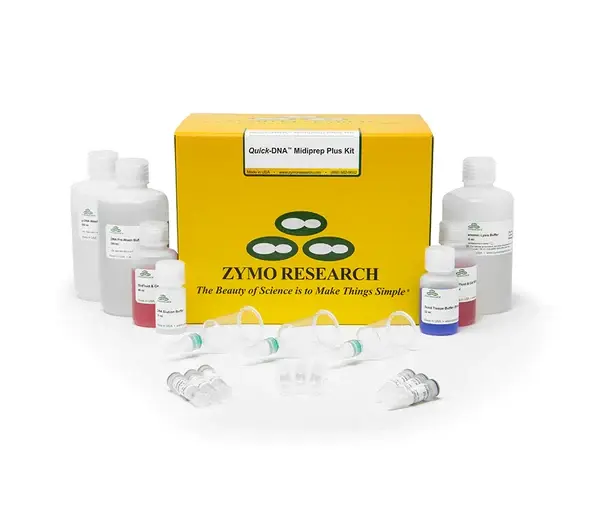
Quick-DNA Plus kits from Zymo Research are designed to deliver high DNA recovery and consistent performance across a wide range of sample types.
Key benefits include:
- Up to 125 µg of genomic DNA yield, helping ensure sufficient material for downstream applications.
- Ultra-pure, NGS-ready DNA, reducing downstream noise and quality-control challenges.
- Compatibility with cells, solid tissue, blood, and environmental samples, supporting diverse discovery workflows.
- Inclusion of DNA/RNA Shield™, which helps stabilise samples during storage and transport to improve upstream consistency.
Why predictable high yield matters
Consistent yield plays an important role in data quality. Predictable high-yield recovery supports stronger replicates, cleaner controls, and more reliable comparisons across experimental groups.
For applications such as screening, phenotyping, omics studies, and comparative analyses, reliable input material supports confident interpretation of results and reduces the risk of technical artifacts influencing key decisions.
As discovery workflows become more complex and increase in throughput, reducing variability during sample preparation becomes increasingly important. By choosing extraction methods that combine high yield with consistency, research teams can improve reproducibility, streamline workflows, and generate more reliable insights from every experiment.
Interested in evaluating the Quick-DNA Miniprep kit? Request a free sample or contact the Sanbio team to discuss your requirements.